
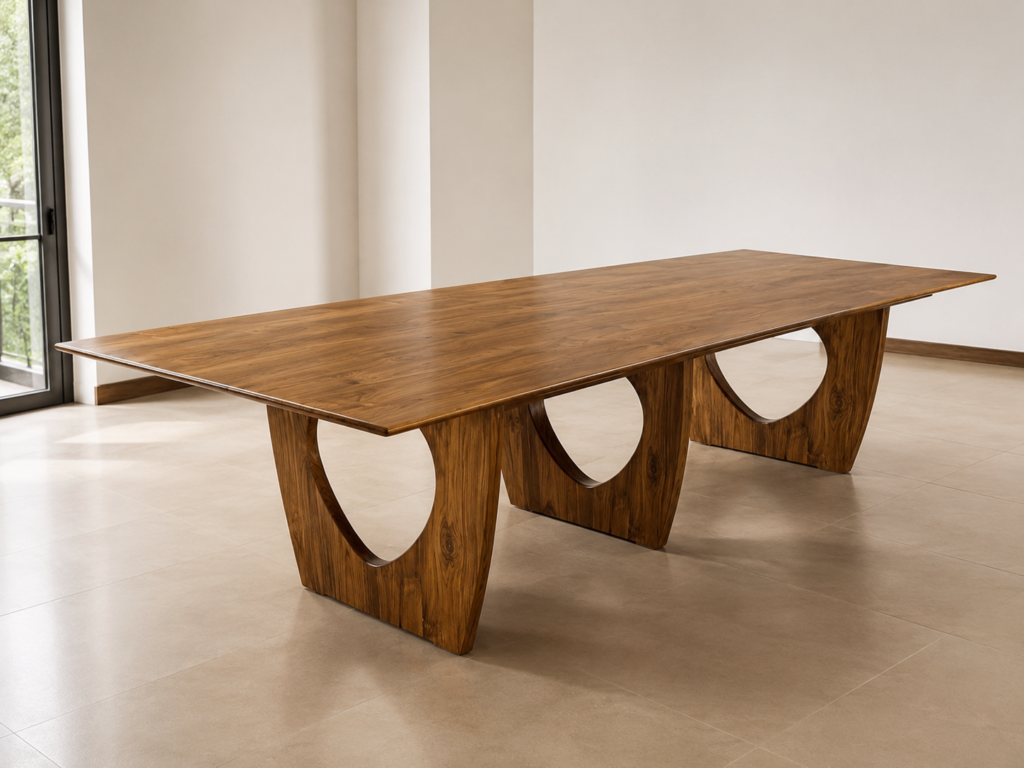
A dining table is one of the few pieces of furniture that gets used every single day, often for decades. It’s also one of the easiest pieces to get wrong; sized incorrectly for the room, built from timber that warps within a year, or finished in a way that shows every scratch within months. For homeowners, designers, and corporate clients furnishing breakout or boardroom spaces in Kenya, a custom solid wood dining table solves most of these problems at the source.
Why Solid Wood Over Veneer or Composite
Veneer and composite tables can look convincing in a showroom, but they don’t age the same way solid wood does. A solid timber table can be sanded, re-oiled, or refinished as it ages, extending its life by years or decades. Veneer, by contrast, shows damage permanently once the surface layer is compromised — a single deep scratch or water mark often can’t be repaired. For a piece of furniture used daily, that difference in long-term durability matters more than the upfront price gap suggests.
Choosing the Right Timber for a Dining Table
Different solid wood species suit different dining table briefs, and the right choice depends on the look, budget, and household or office context.
Mahogany is a strong choice for a statement dining table. Rich in tone, fine-grained, and resistant to warping, making it well suited to formal dining rooms or executive boardroom tables.
Mvule offers a warm, golden finish and exceptional strength, making it ideal for large-format tables that need to seat eight or more without flexing or shifting over time.
Teak brings natural moisture and pest resistance, which makes it a dependable option for households with children, frequent entertaining, or humid coastal locations.
Cypress is a lighter, more affordable option that still performs well structurally, suited to smaller dining tables or more contemporary, pale interiors.
Mango wood has become popular for its distinctive grain and sustainability story, working particularly well for tables with a more rustic or characterful aesthetic.
Getting the Size and Shape Right
A custom table means the dimensions can be built around the room rather than the room being arranged around an off-the-shelf size. A few practical guidelines help:
- Allow roughly 60cm of width per seated person along each side of the table
- Leave at least 90cm of clearance around the table for chairs to pull out and people to walk past comfortably
- Rectangular tables suit most rooms and seating counts efficiently; round and oval tables work better in smaller or more conversational dining spaces
Joinery and Construction Quality
The visible timber is only part of what makes a dining table last. Joinery; how the legs, apron, and tabletop are connected determines whether a table stays solid or starts to wobble within a year or two. Mortise-and-tenon joints, properly glued and reinforced, outperform screwed or bracket-only construction, particularly for larger tables under regular daily load.
Finish Considerations
A table’s finish affects both appearance and maintenance. Oiled finishes bring out the natural grain and are easy to spot-repair but need periodic reapplication. Lacquered or varnished finishes offer stronger protection against spills and scratches with less ongoing maintenance, at the cost of a slightly less natural feel. The right choice depends on how the table will actually be used day to day.
Specifying a Custom Table in Kenya
Whether for a family home, a hospitality dining room, or a corporate boardroom, a custom solid wood dining table built to the exact dimensions and timber specification of the space tends to outperform imported, mass-produced alternatives in both fit and longevity. Furniture International designs and manufactures custom dining tables in cypress, mahogany, teak, mvule, palm wood, and mango wood, built to the size, shape, and finish each project requires.